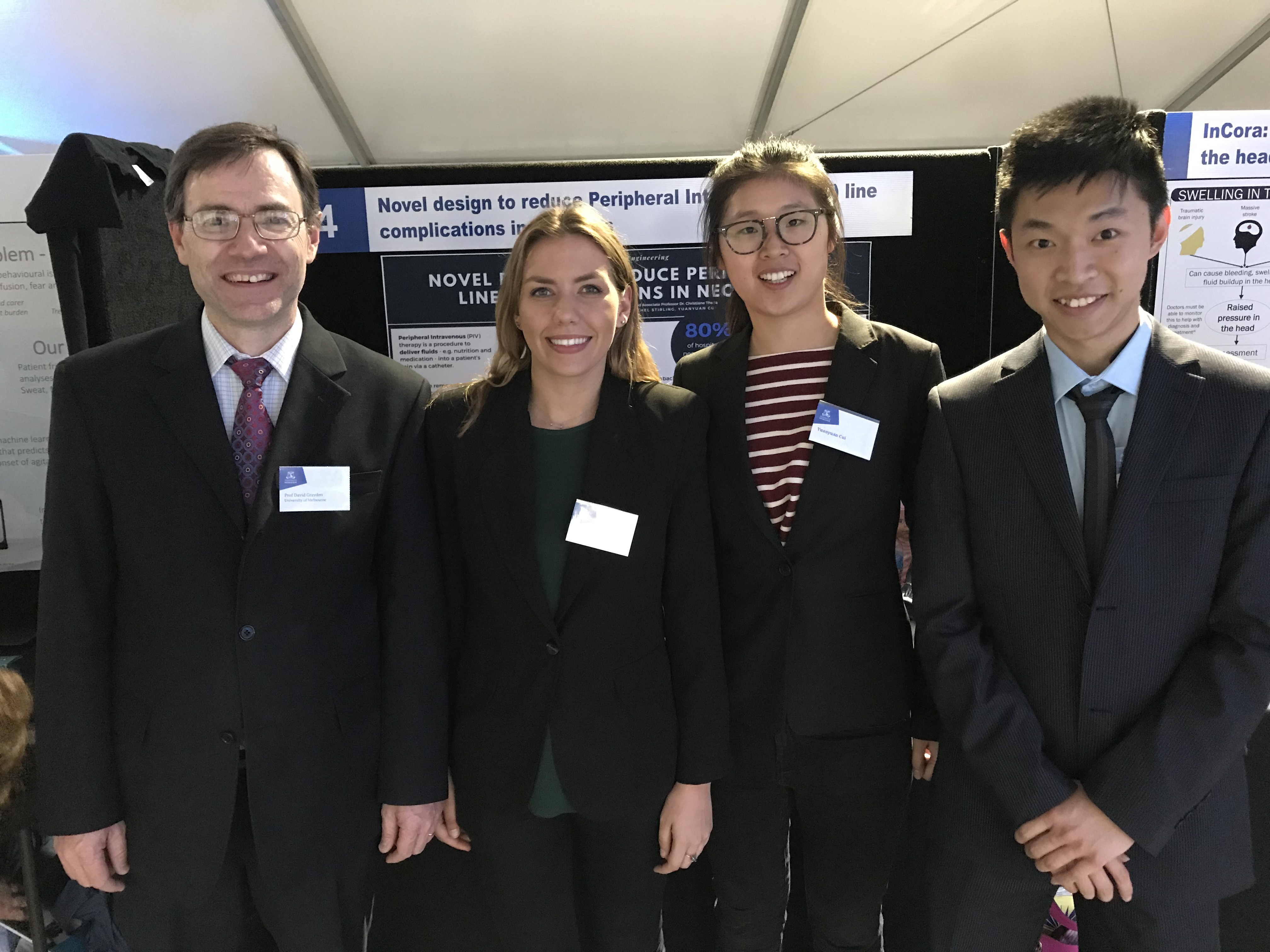
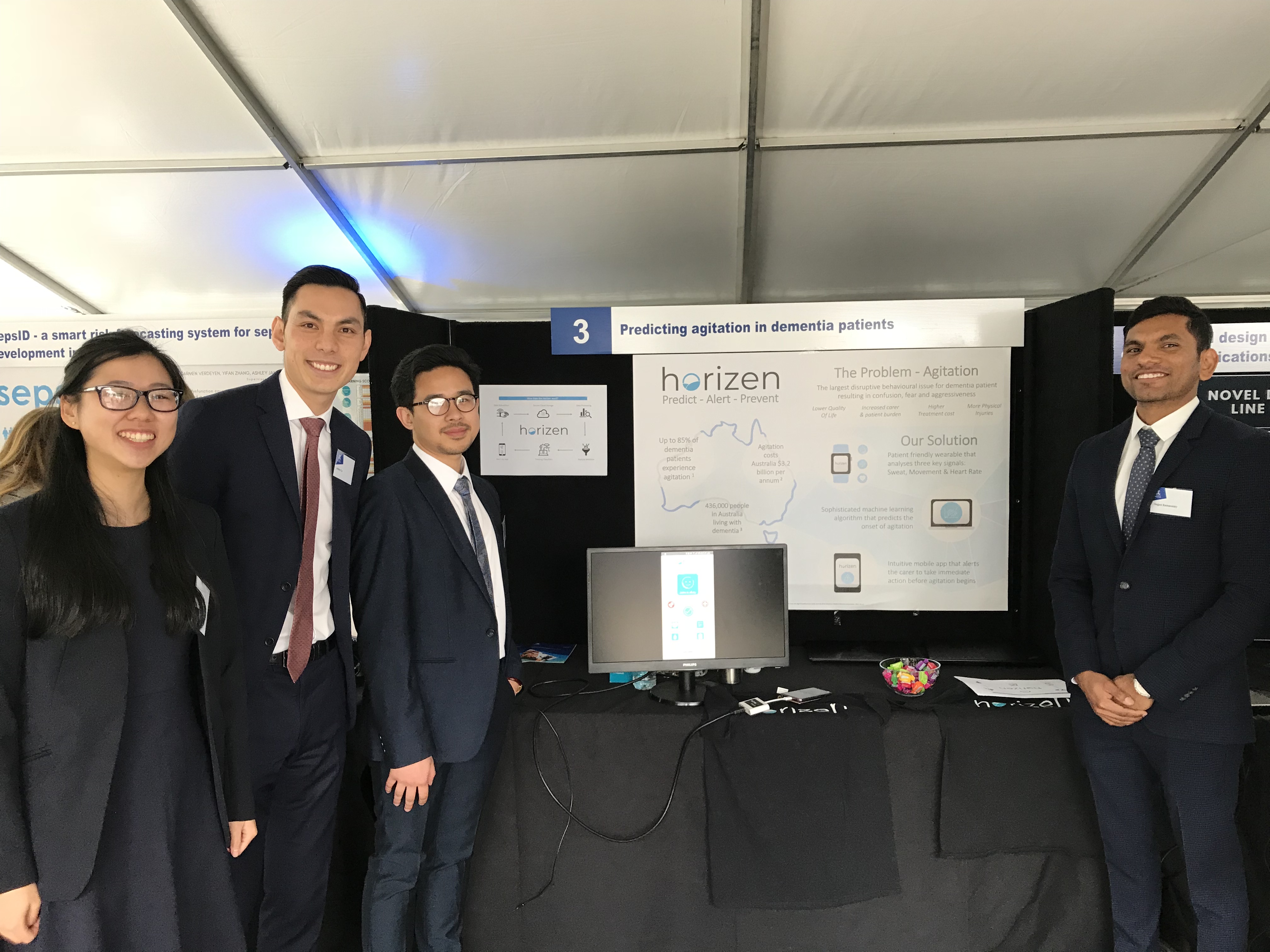
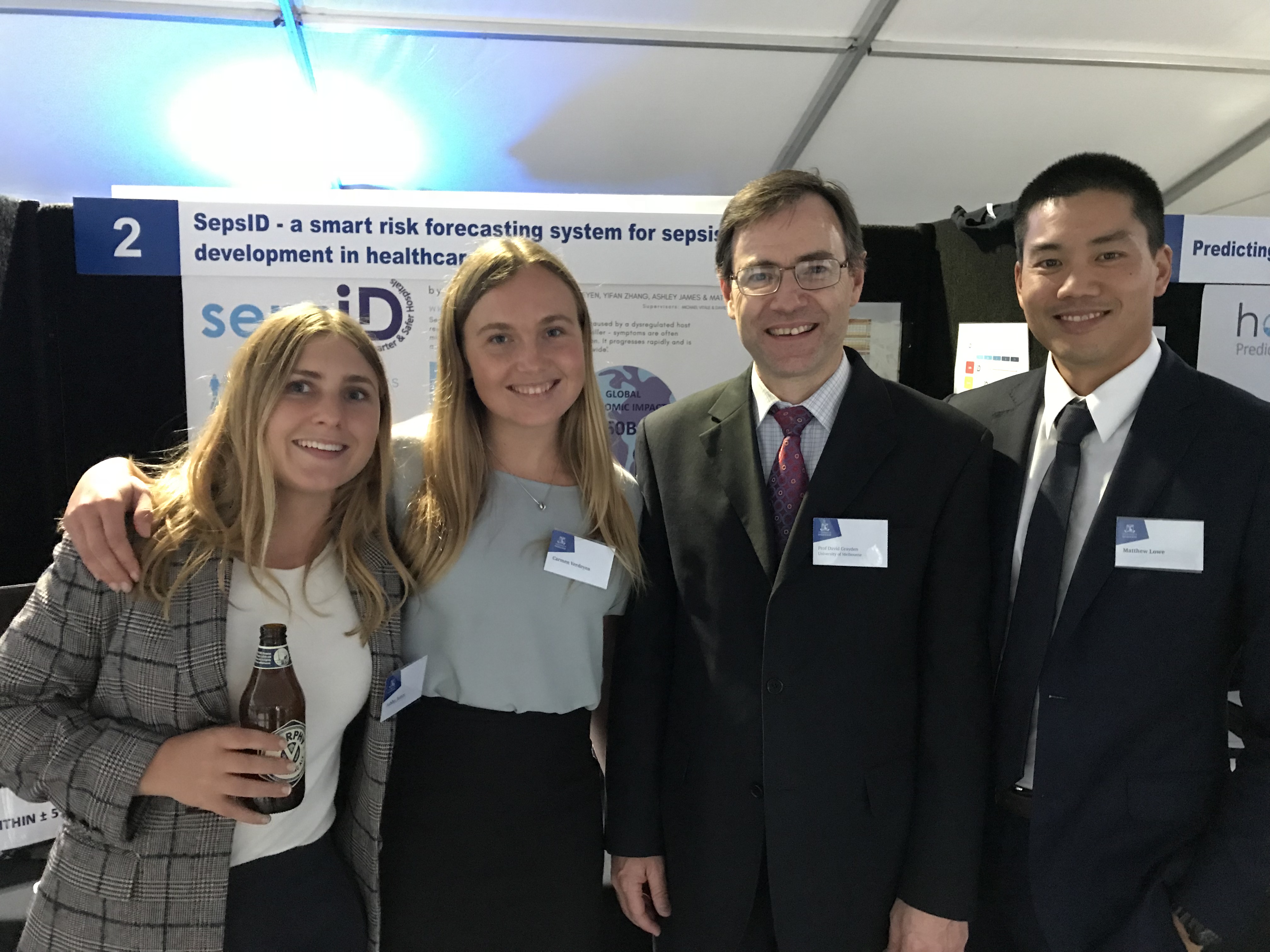
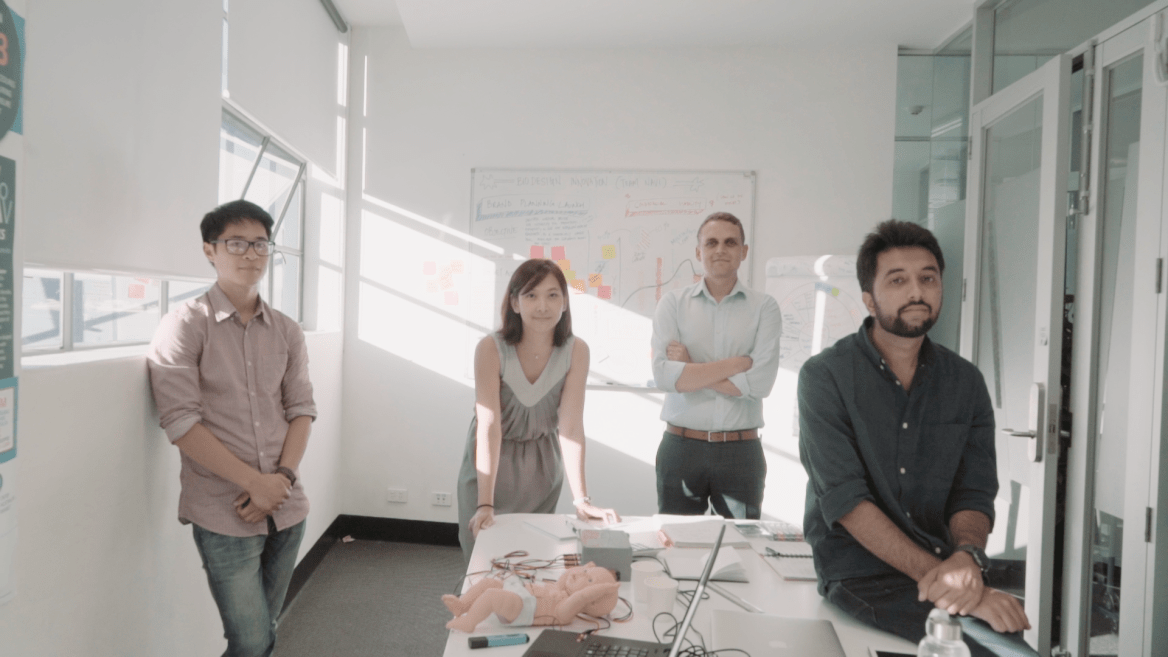
The 2019 cohort consists of four teams working on high-impact projects to help pre-term babies, anaesthetists, rescuers and surgeons.
Team Cari
Team Cari has developed a better-fitting CPAP interface for pre-term babies in intensive care units. This reduces the risk of nasal injury significantly.
Team Gadzet
Team Gadzet has created a comprehensive monitoring system that enables anaesthetists to monitor the site of drug administration and alert them if something goes wrong.
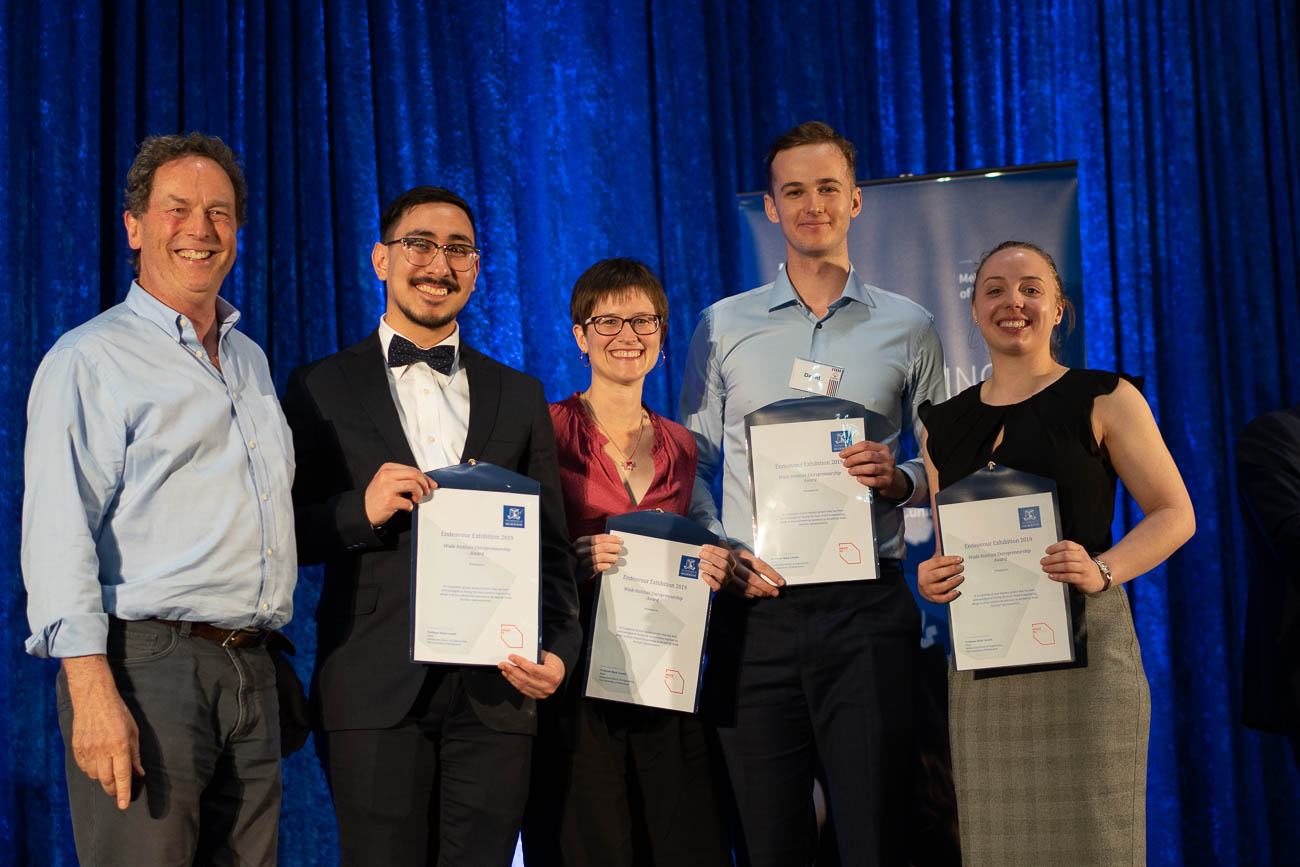
At the 2019 University of Melbourne Endeavour Exhibition, Team Gadzet won one of the two prestigious Wade Institute Entrepreneurship Awards.
Team NeuroVIS
The team developed a system to address nerve damage during surgery. It integrates with existing surgical equipment to identify and provide in real-time information about the location of nerves to surgeons who can then reduce nerve damage during procedures.
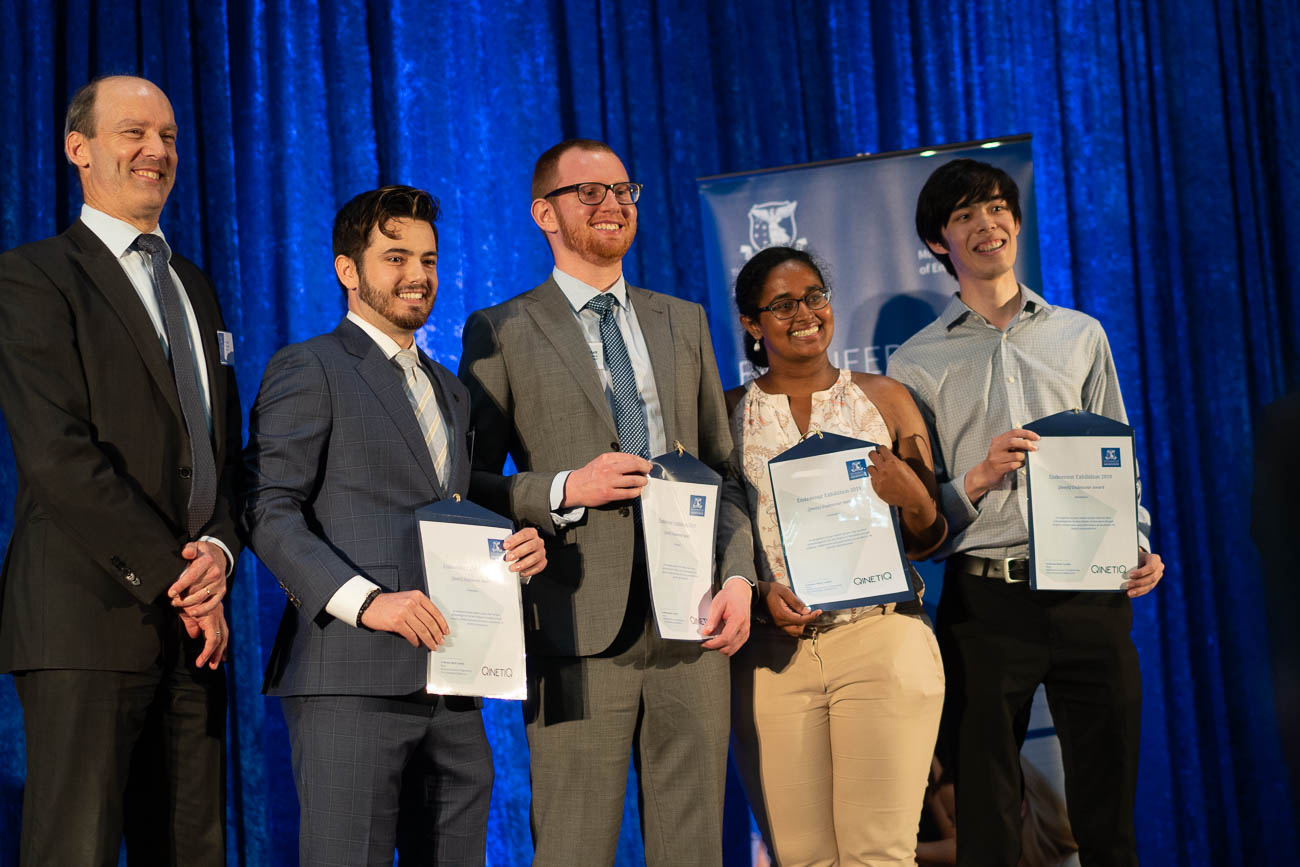
Team Neurovis won three awards at the 2019 Endeavour Exhibition: the University of Melbourne RIC (Research Innovation and Commercialisation) Prize, QinetiQ Endeavour Award and the Wade Institute Entrepreneurship Award.
Team Rescuent
A pocket PCR guidance device. It detects CPR compression and offers feedback to rescuers. This improves cardiac arrest survival rates with higher-quality CPR.
Team Ventora developed a prototype device to assist in measuring airway pressure in neonatal infants in intensive care who are receive assisted breathing via CPAP or high-flow.
The team is seeking to commercialise their device, after winning a place in the final five of MedTech’s Got Talent. Team Ventora joined The Actuator Accelerator in 2019. They were also accepted into the Melbourne Accelerator Velocity program in 2019.
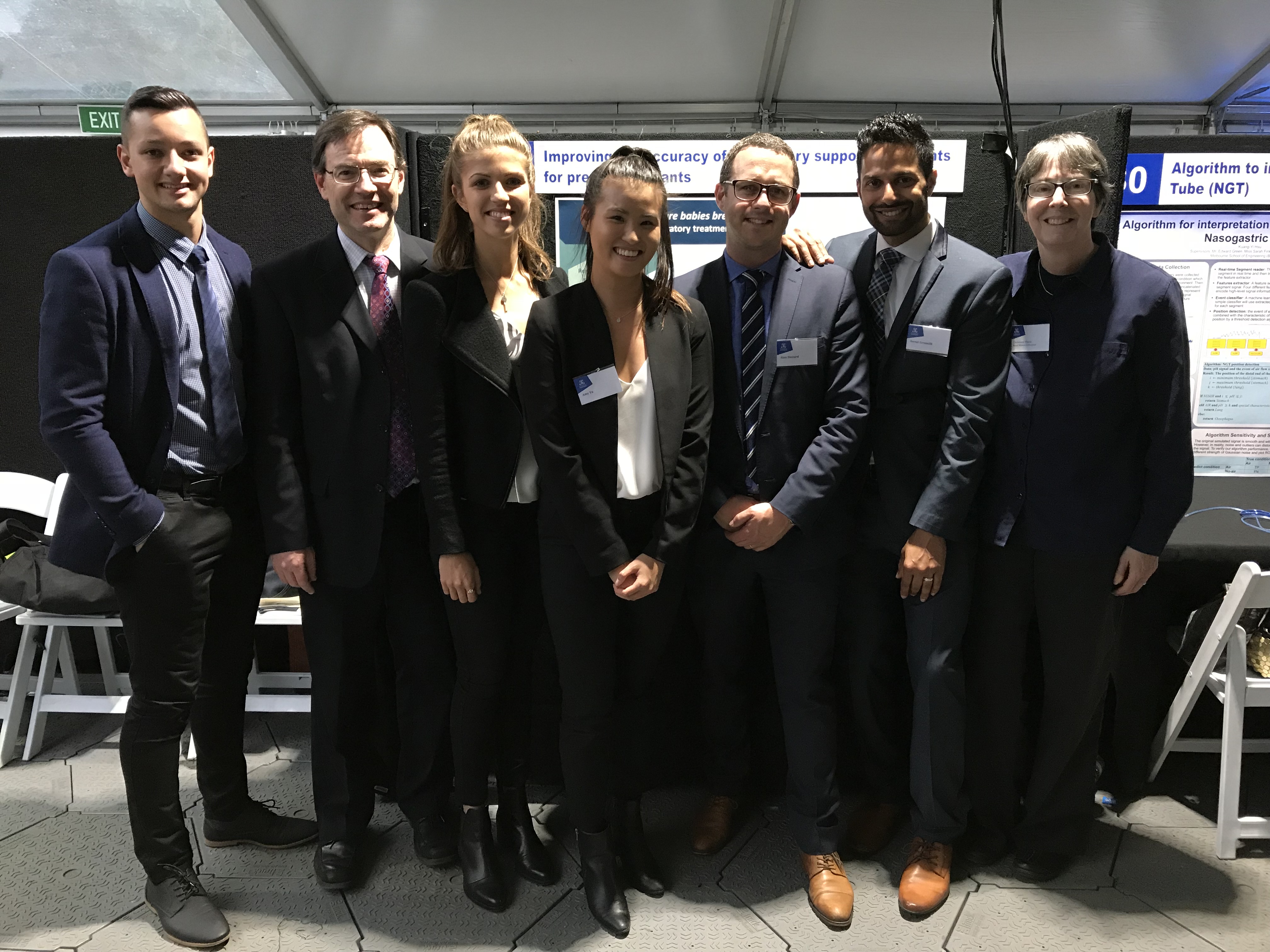
Amy Yu represented Ventora Medical in Shanghai at the #HiMed Accelerator and Innovation Centre opening ceremony/bootcamp and at the #Slush Shanghai Expo in 2019. Edward Buijs represented Ventora at the 2019 AdvaMed The MedTech Conference in Boston.
InCora
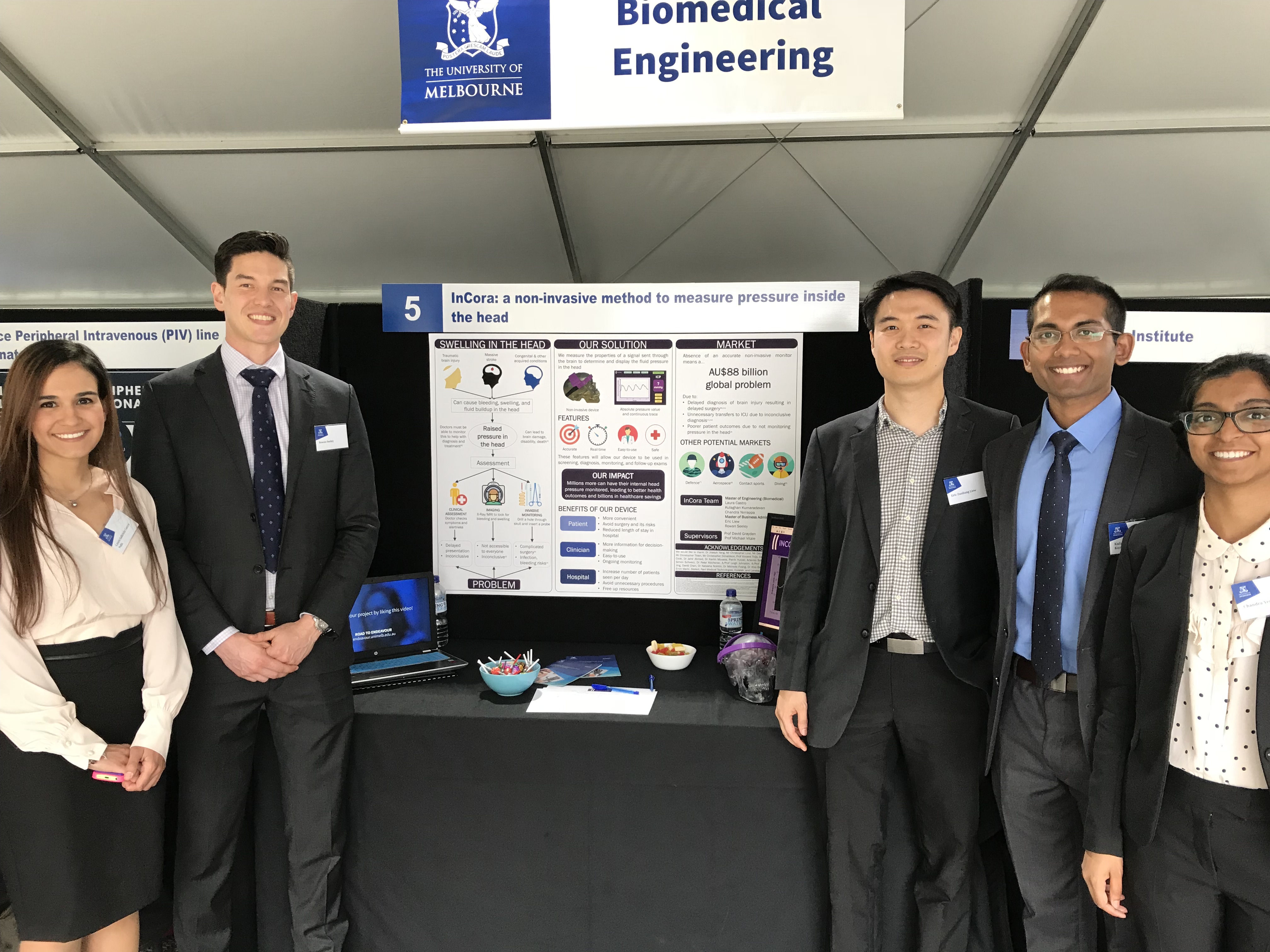
Team InCora developed a prototype device to non-invasively measure pressure inside the head.
Scionic
Team Scionic developed a prototype device to reduce Peripheral Intravenous (PIV) line complications for neonates in Australia and worldwide.
Horizen
Team Horizen developed a prototype device to predict agitation in dementia patients. They won the People’s Choice Award at Medtech’s Got Talent 2018.
SepsID
Team SepsID developed a prototype device to estimate risk of sepsis development in healthcare.
Winner of “Make Your Medical Device Pitch for Kids!” competition (US$50,000), Sep 2017 at the Fifth Annual Pediatric Device Innovation Symposium in San Jose, California, USA.
Winner of the Startup Victoria Healthtech Pitch Night ($150,000), Aug 2017. In addition, the team won the People’s Choice Award at the Startup Victoria Healthtech Pitch night.
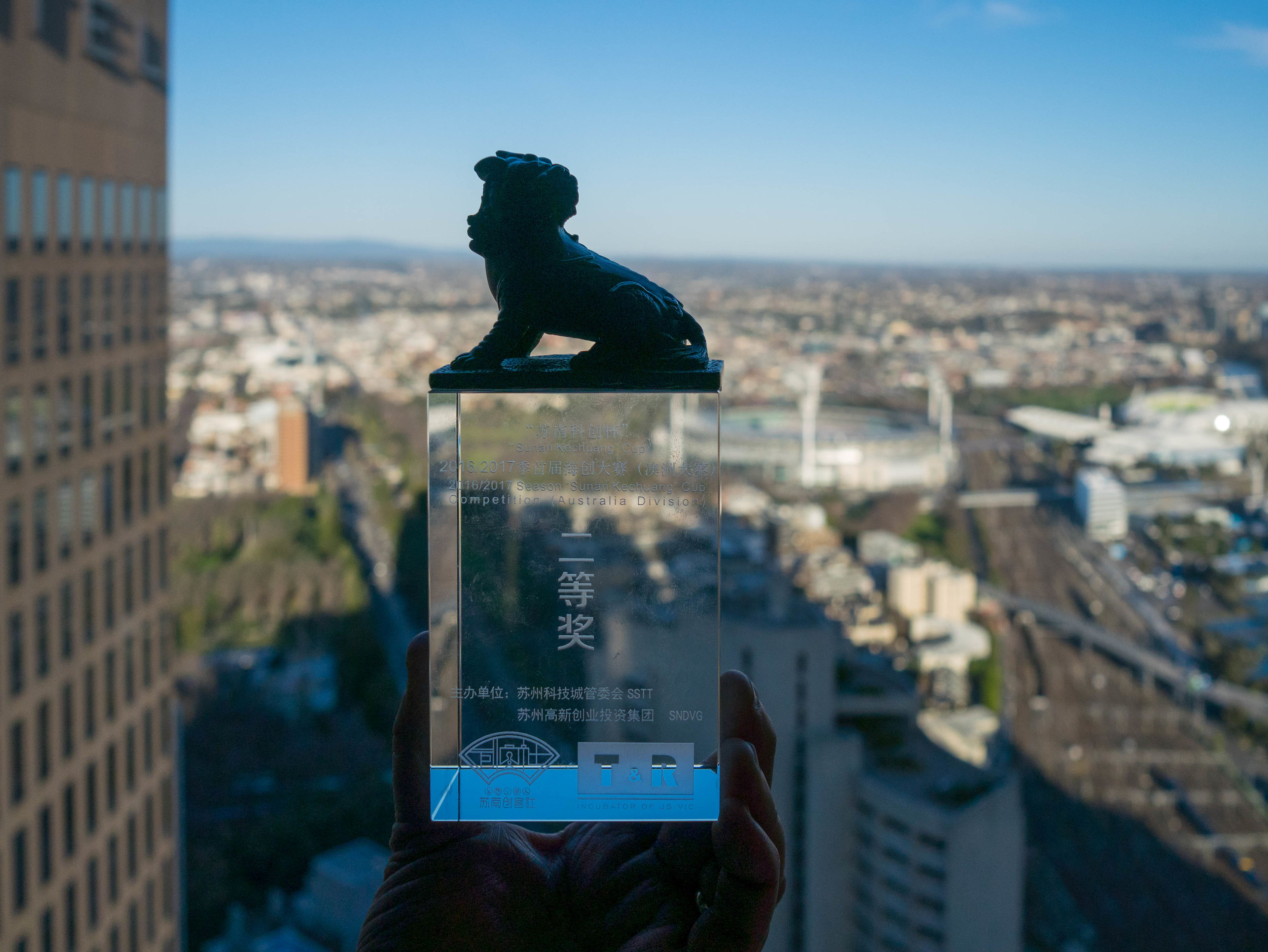
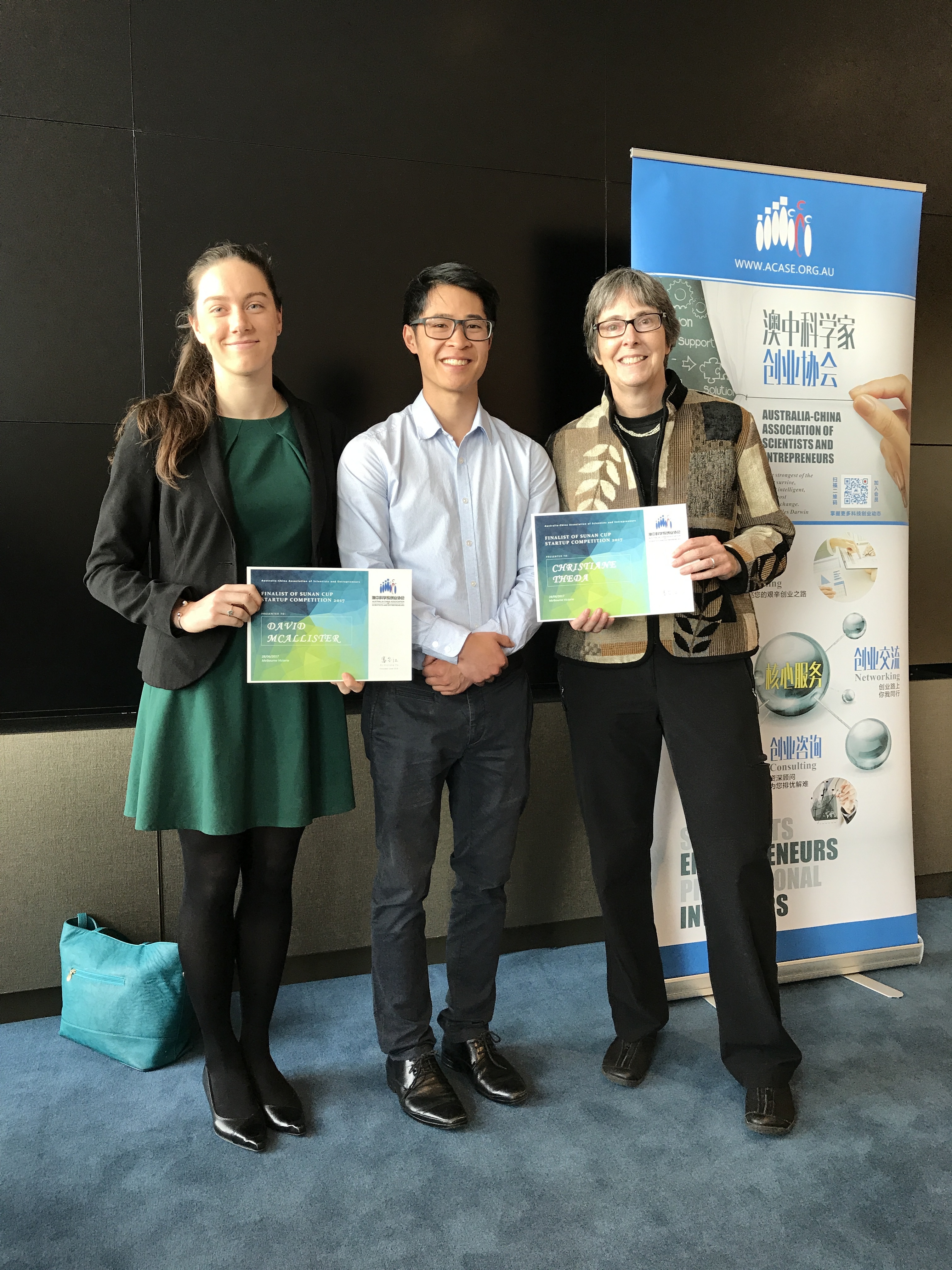
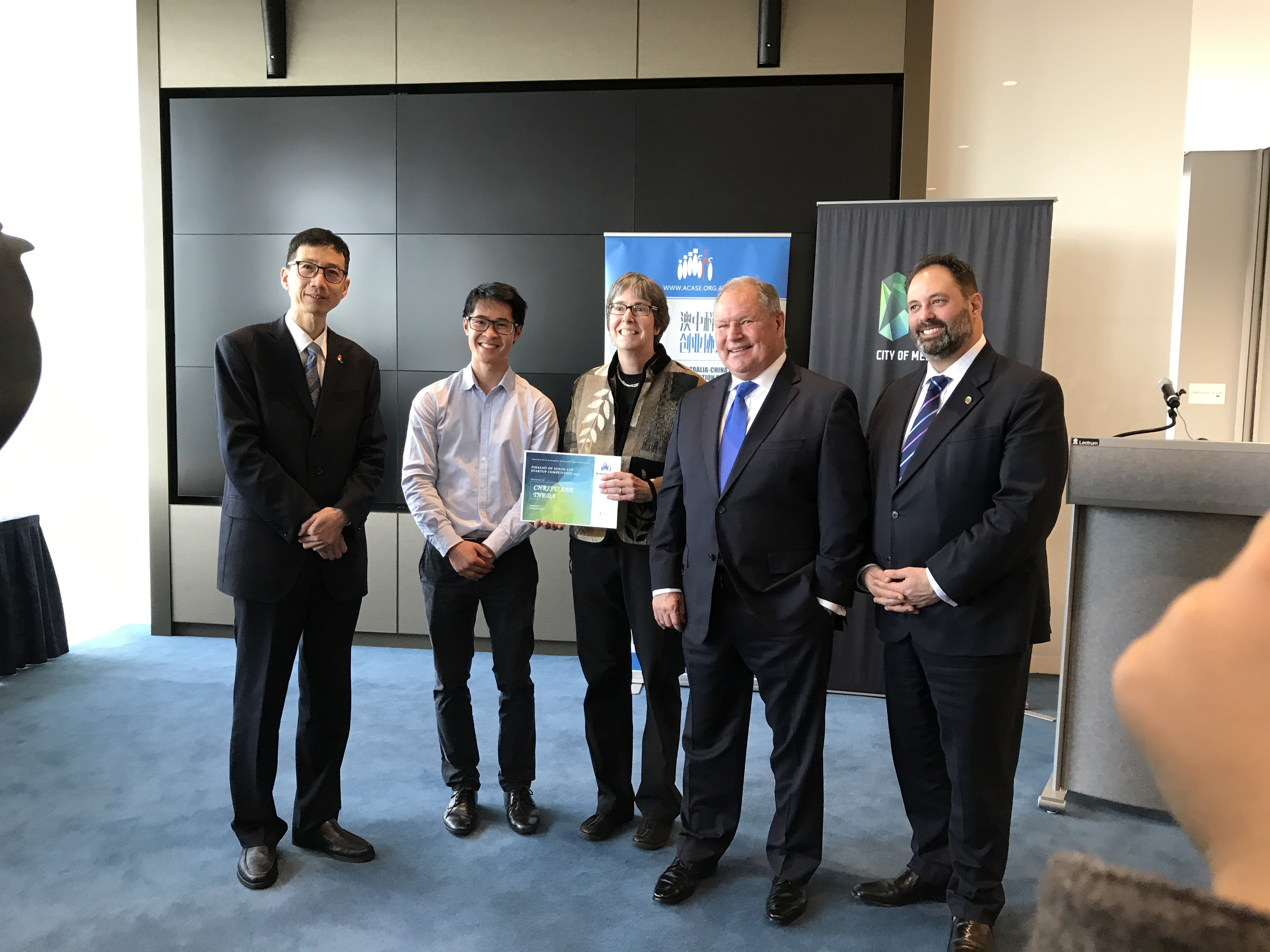
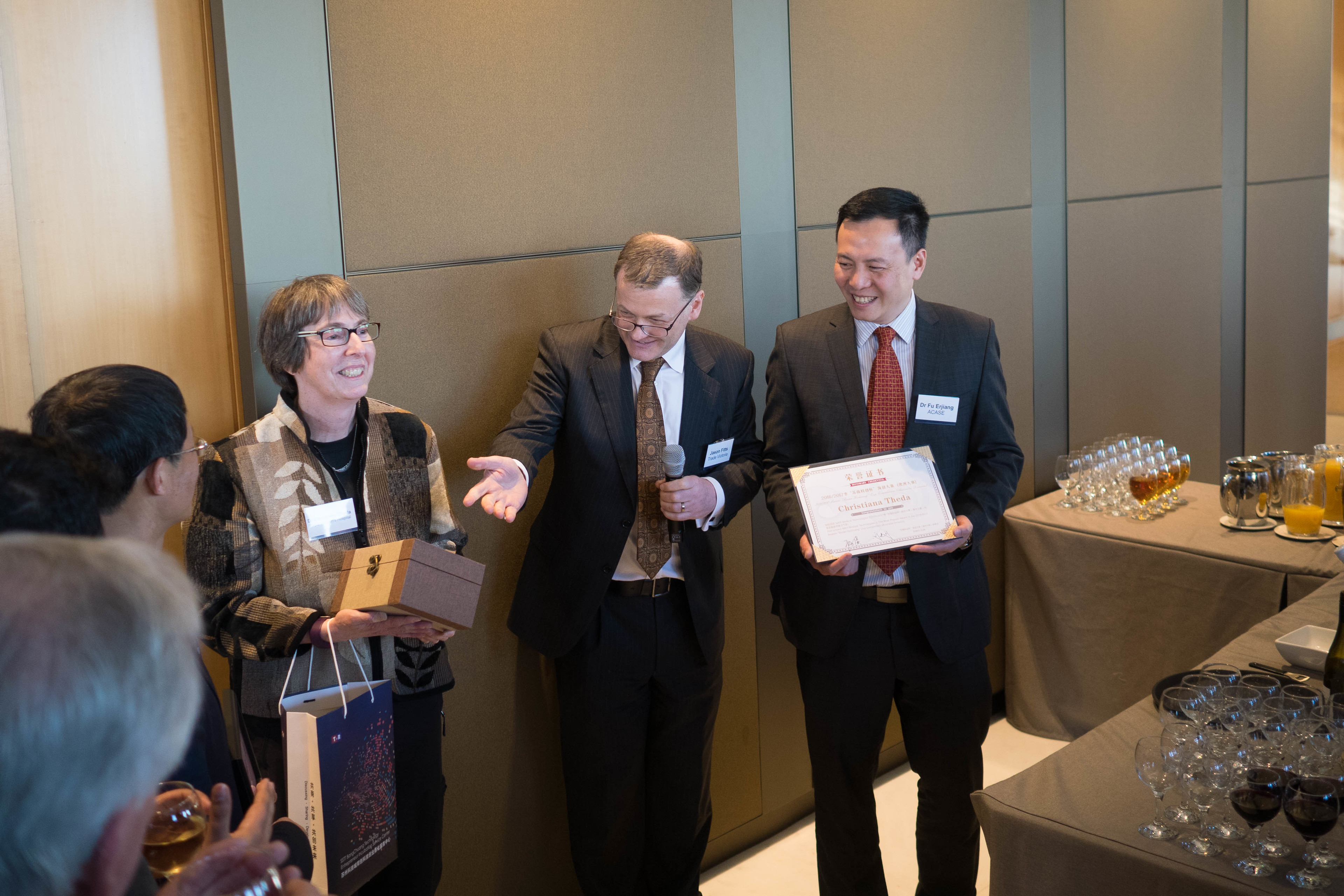
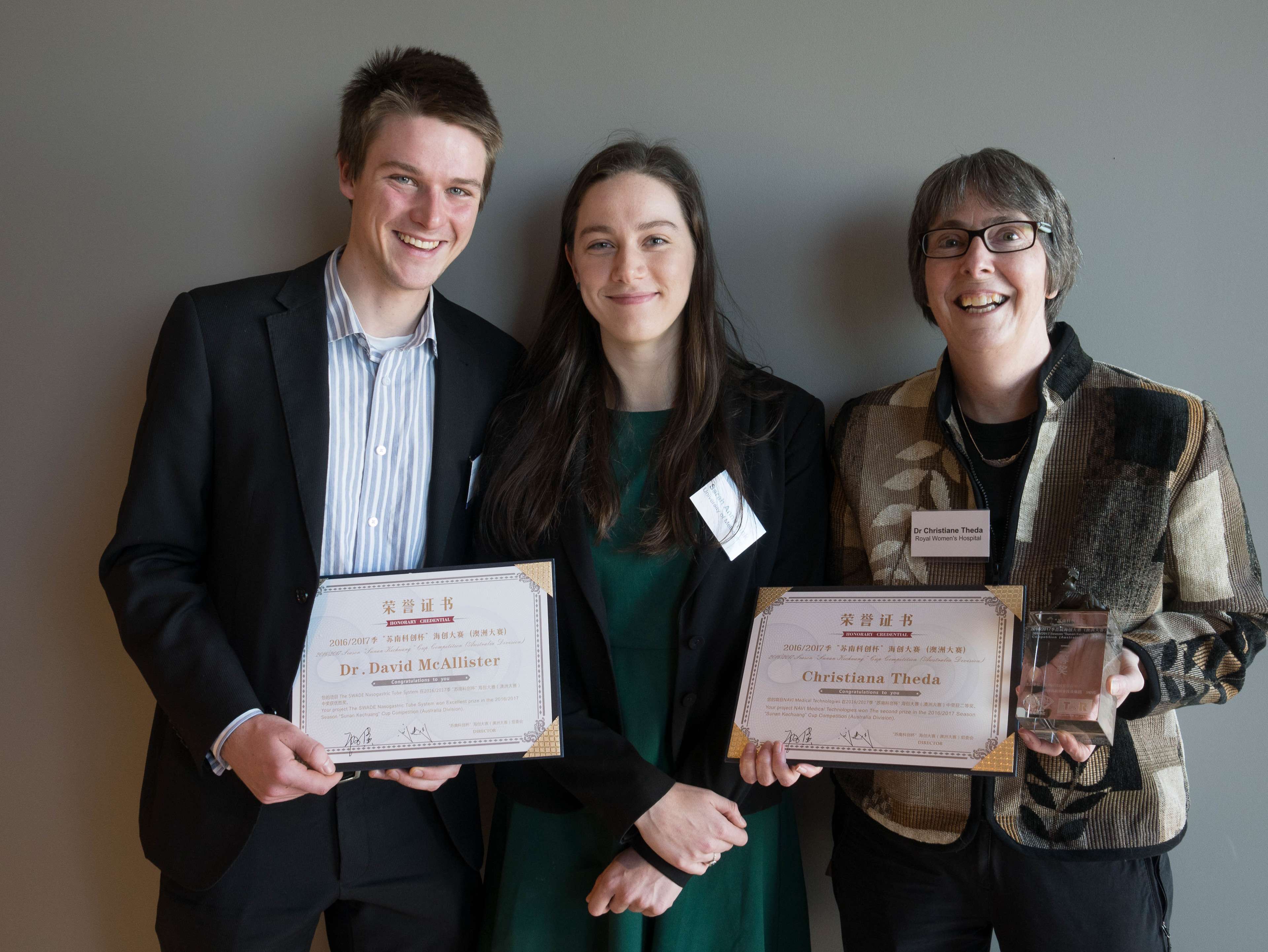
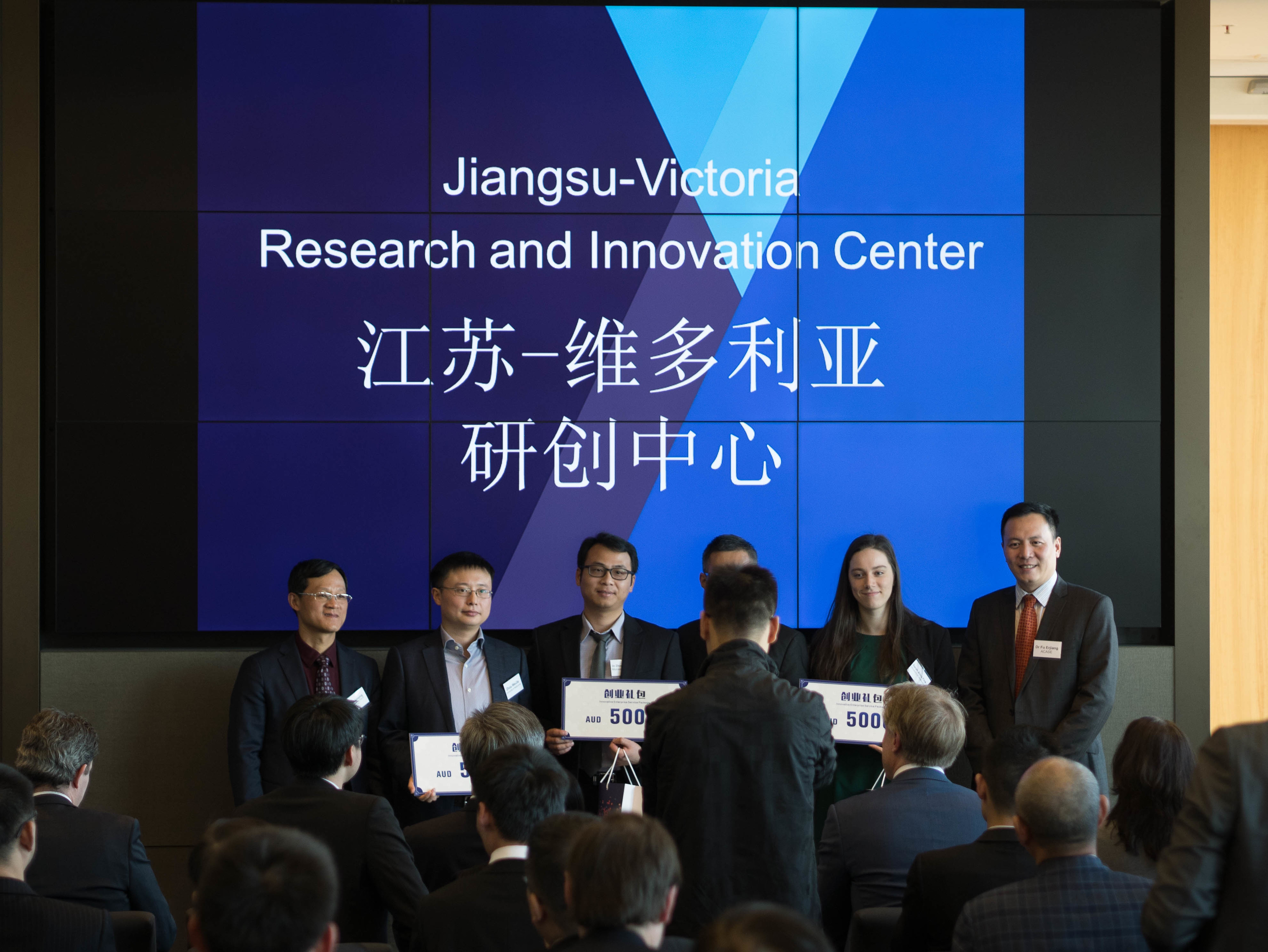
Second place in Victoria-China Sunan Cup Startup Competition ($15,000), Sep 2017. The team won an additional $1,000 prize for being the most popular project.
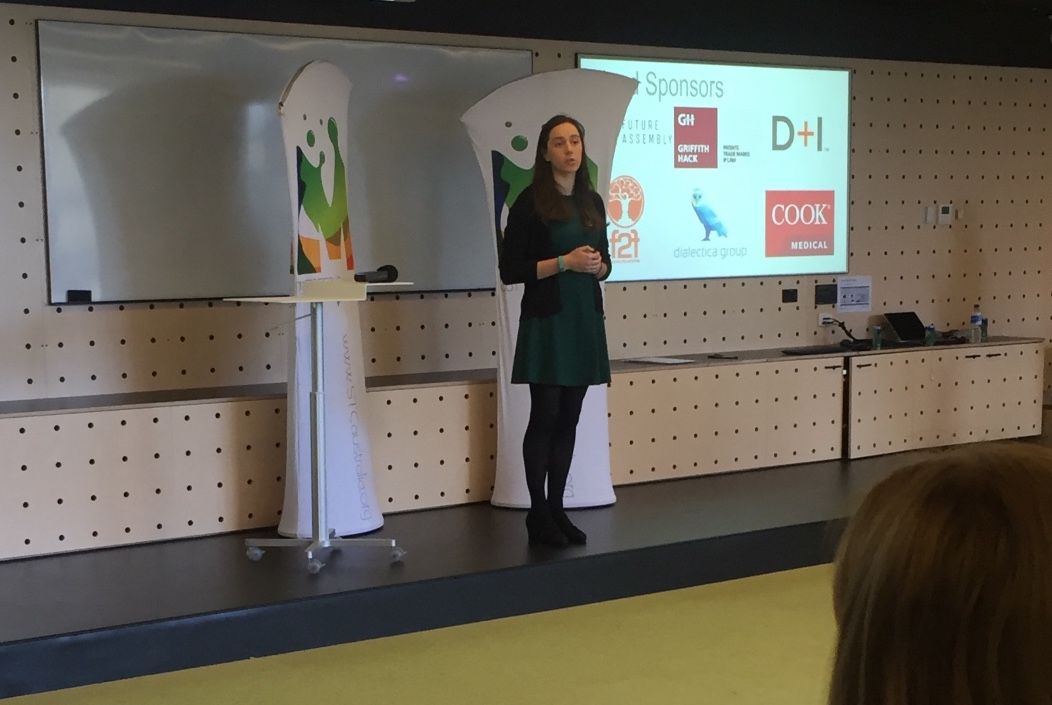
Wei Sue gave the winning pitch at the Startup Victoria Healthtech Pitching Competition 2017.Teams SWADE and Navi at the Sunan Cup FinalsAt the Sunan Cup FinalsMost Popular team prize: announced at the Sunan Cup CeremonySunan Cup Awards- Teams SWADE and NaviBehind the scenes: filming the MBS Impact Video 2017
Team Neuro:
Won two awards at Endeavour: the Endeavour Wade Institute Entrepreneurship prize and the IEEE Award for Technical Innovation & Engineering Achievement.
Team Neuro wins one of two Wade Institute Entrepreneurship Award
Team SWADE:
Final five at MedTech’s Got Talent ($20,000 prize plus an incubation process with mentors).
Finalist in Victoria-China Sunan Cup Startup competition (received $5000 prize).
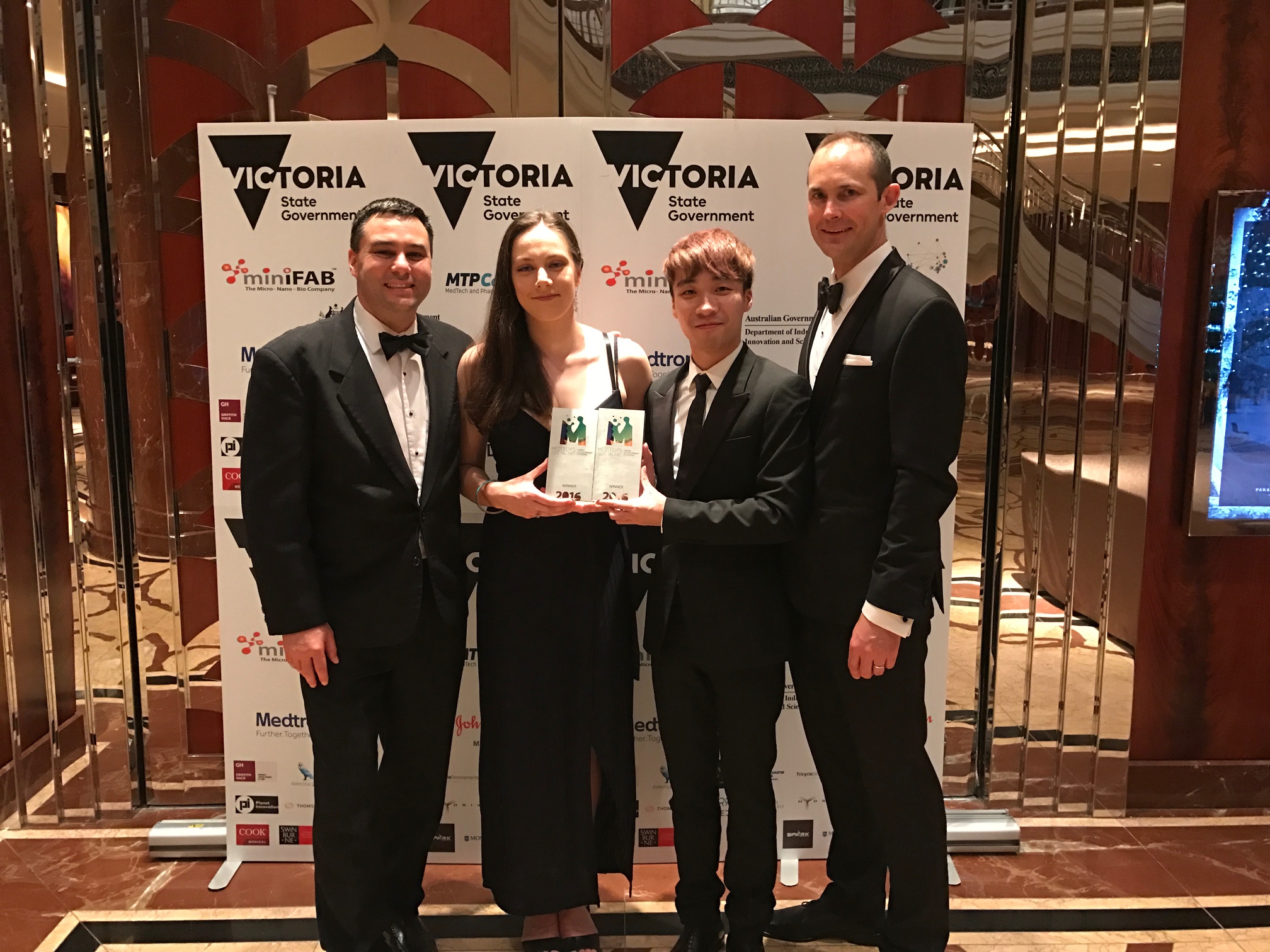
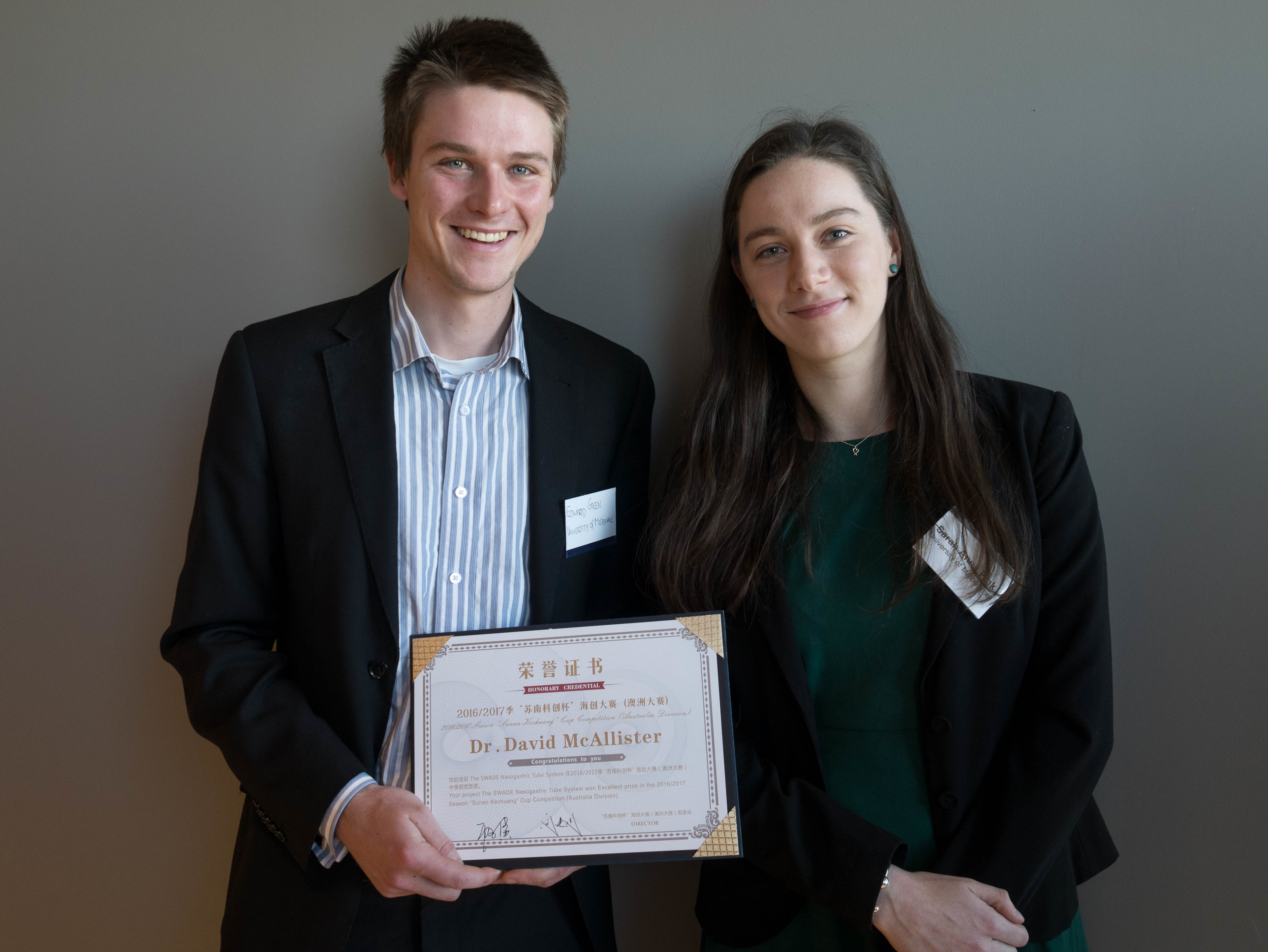
Sarah pitching at the Medtech’s Got Talent Finals.Teams SWADE and PELT – winners of $20k prizes at Medtech’s Got Talent 2016.Ed and Sarah receiving the prize for the at the Sunan Cup Awards Ceremony 2017.Sarah receiving the team’s prize at the Sunan Cup Awards Ceremony, 2017.
Team PELT:
Final five at MedTech’s Got Talent ($20,000 prize plus an incubation process with mentors)
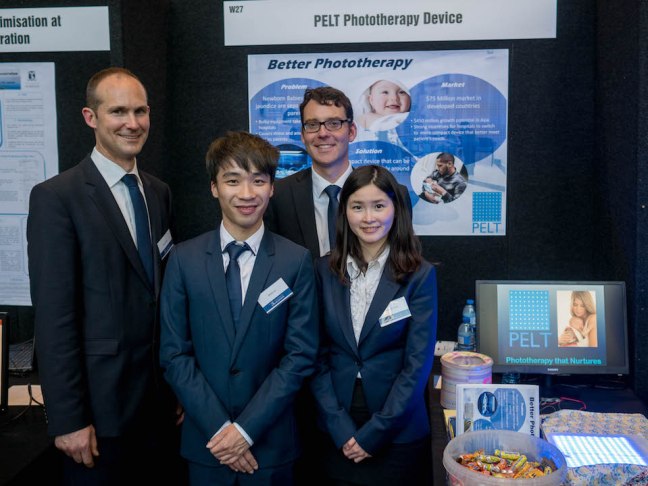
Teams SWADE and PELT – winners of $20k prizes at Medtech’s Got Talent 2016.Team PELT at Endeavour. Photo by Kwang
Team members: Laura Dooley, John Negropontis, William Yang, Ajit Ravindran, Hiranya Perera, Martin Thompson.
Project:
Reducing pressure injury in patients on surgical tables.
Achievements:
Competitor in MedTech’s Got Talent
Winner, 2017 Endeavour Wade Institute Entrepreneurship Award
Winner, 2017 Endeavour Research, Innovation and Commercialisation Prize
Overall health winner, 2019 Bendigo Innovation and Invention Festival
Lenexa was accepted into The Actuator Accelerator in 2018, and raised $1m in grants and investments in 2019. They were also accepted into Melbourne Health Accelerator in 2019.
Team Vital5
Team members: Vlad Litvenko, Tim De Rango, James Bennett, Naomi Wo, Edward Wong.
Project:
Patient monitoring system
Team RespiRate (now Curatek)
Team members: Hannah Merrigan, Reagan Susanto, Jason Chiang, Megan Astle, Lee Gibson.
Project:
Respiratory rate increase is the strongest predictor of hospital patient deterioration. Early warning of deterioration enables intervention, and prevents adverse events such as cardiac arrest, unexpected death and unplanned ICU admission. In addition to saving lives, early warning reduces costs to the health system. Despite its importance in triggering early warning systems, studies show that respiratory rate is the least accurately recorded vital sign, often excluded completely. We are developing a cost-effective, wearable sensor configuration to provide continuous monitoring of respiratory rate..
Achievements:
Competitor in MedTech’s Got Talent
Merit Award, 2017 Endeavour Research, Innovation and Commercialisation Prize
Team Curatek was accepted into The Actuator Accelerator in 2018, and raised $200k in grants and investments (as of 2019) and are continuing to raise funding. They were also accepted into Melbourne Health Accelerator in 2019.
Team Stelect
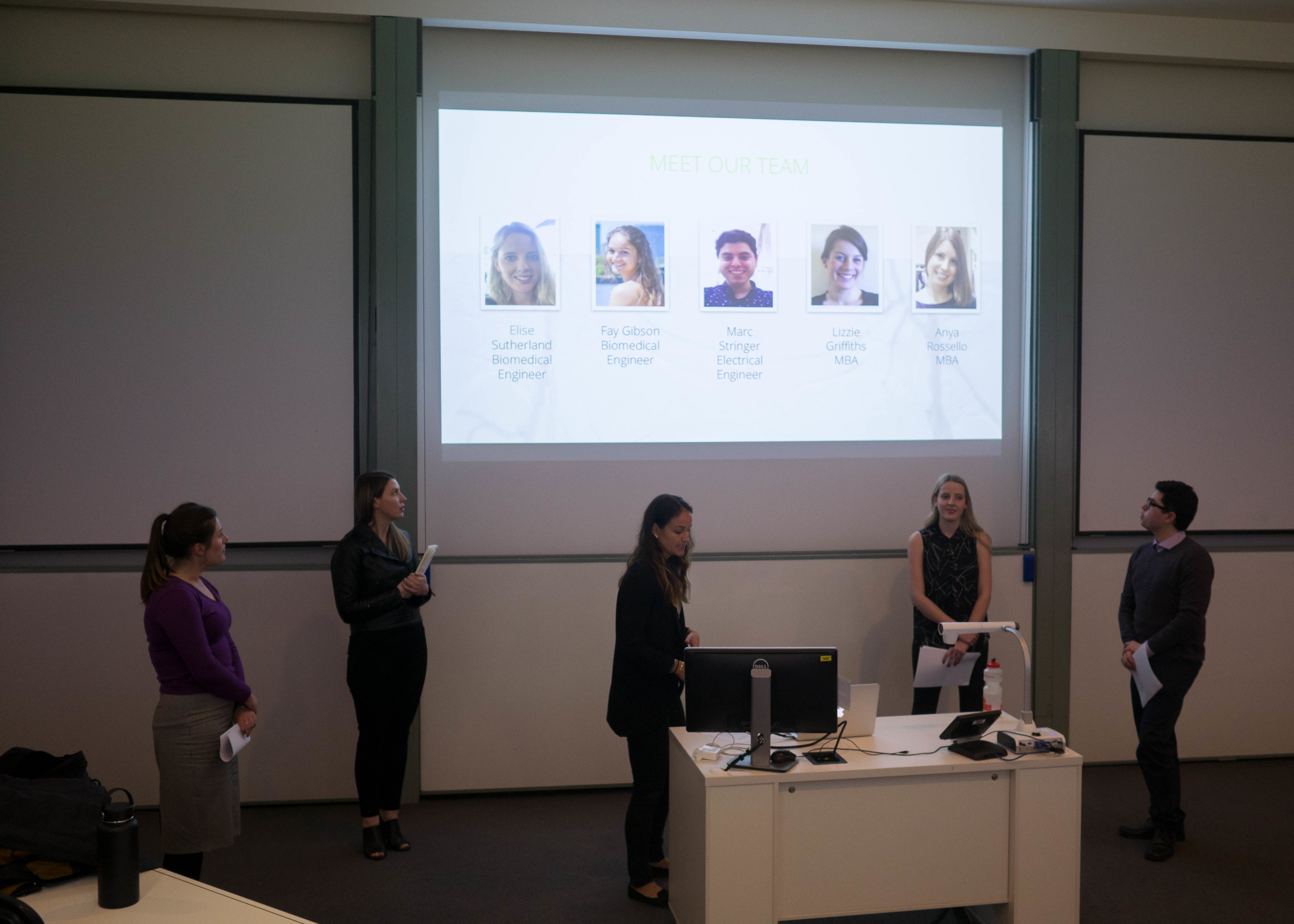
Team members: Elise Sutherland, Fay Gibson, Marc Stringer, Lizzie Griffiths, AR.
Project:
An accurate method for physicians to select the optimal stent length when treating patients with coronary stenosis to reduce the incidence of thrombosis and restenosis. In collaboration with cardiologist Prof Peter Barlis.
Achievements:
Won the top prize in MedTech’s Got Talent ($60,000 prize)
Awarded $7000 plus People’s Choice award of $1000 in Ernst & Young Beat the Panel
Stelect was accepted into The Actuator Accelerator in 2018, and raised over $1 million in grants and investments in 2019. The team was featured in the Melbourne Accelerator Gala dinner 2019 and both Elise and Fay have contributed as guest speakers at many events.
Three of the teams were featured on television by Nine News.
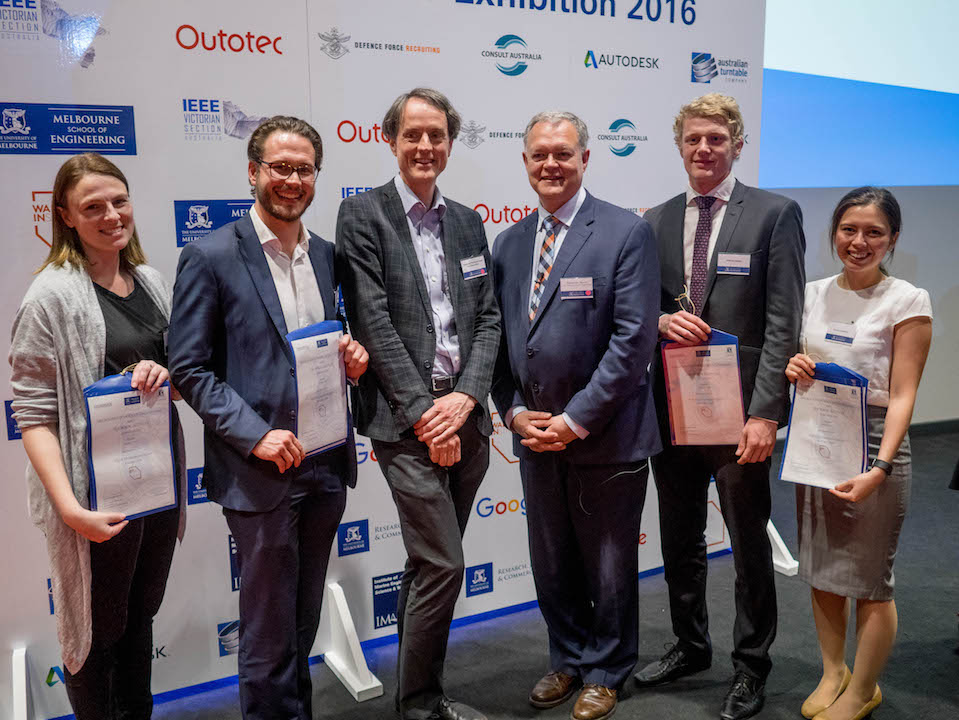
Congratulations to team Neuro. They won one of two Endeavour Wade Institute Entrepreneurship prizes. They also won the IEEE Award for Technical Innovation & Engineering Achievement.
Team Neuro at the Awards Ceremony with Dean of Engineering, Prof. Iven Mareels, and Master of Ormond College & the Wade Institute, Rufus Black. Photo by Kwang.
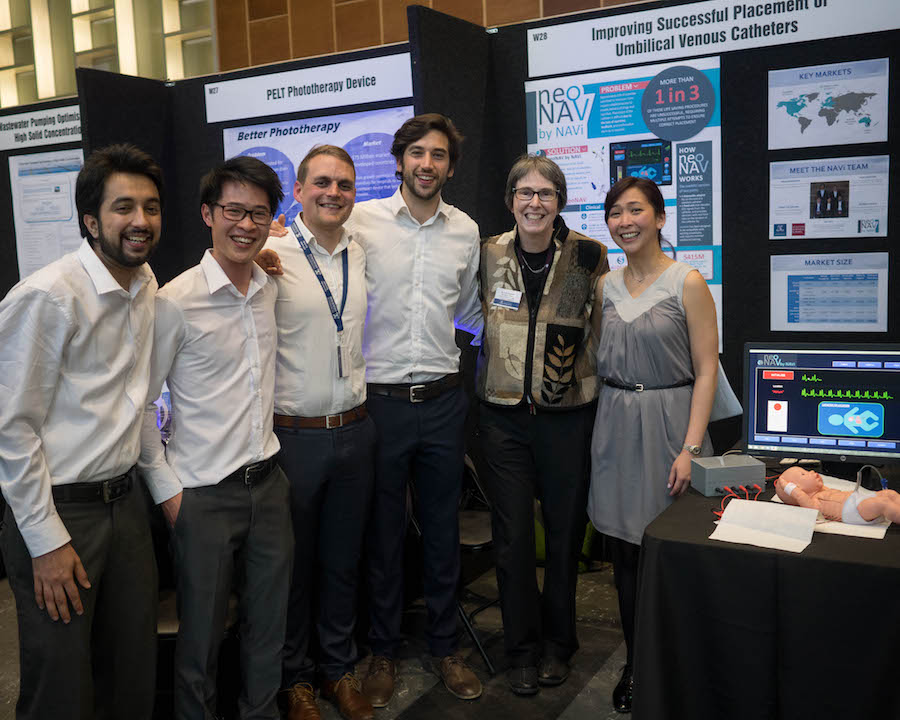
Each team presented a demo and poster at their booth. It was a great chance to share their hard work and they received a great deal of interest among visitors.
Team Navi at Endeavour. Photo by Kwang
Team SWADE at Endeavour. Photo by Kwang.
Team PELT at Endeavour. Photo by Kwang
Team n.i. at Endeavour. Photo by Kwang
Kwang at the SWADE booth trying an NGT. Photo by Team SWADE
Prof Leon Mann visits team PELT’s Endeavour booth
Mubin shows a demo at Endeavour. Photo by Kwang.
Team Neuro wins one of two Wade Institute Entrepreneurship Award
BioDesign Melbourne was co-taught by Kwanghui Lim and David Grayden. The pioneering class of BioDesign students consists of five teams.
Team Navi:
Alex Newton, Wei Sue, Bradley Bergmann, Shing Yue Sheung and Mubin Yousuf.
Project:
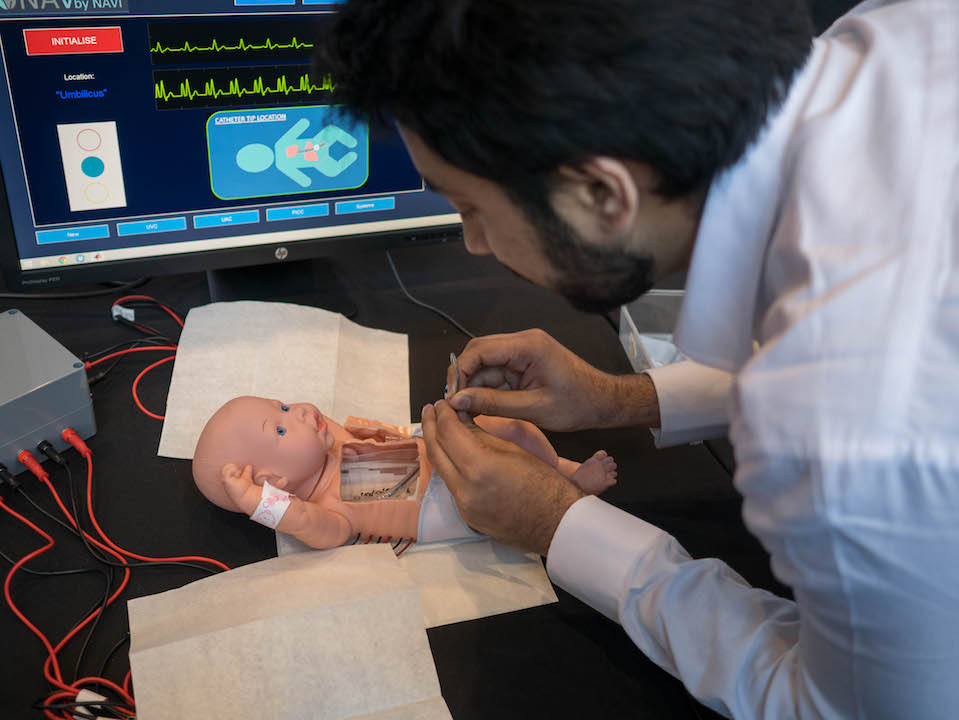
For over 60 years, umbilical venous catheters (UVCs) have been placed in critically ill new-born babies to provide a vital pathway for drug delivery. Despite frequent and widespread use, UVC insertions are performed “blind”, with no guarantee of correct placement during the procedure, potentially putting the patient’s safety at risk.
We create a device that identifies the UVC tip location to ensure correct placement. Development of this device not only reduces the time, resource and materials currently required for UVC insertions, but above all improves clinical outcomes for the patient.
Team Neuro:
Gerdus Buitendag, Evelyn Loveband, Nicola Ingram and William Abbott.
Project:
A way for stroke patients to undertake independent rehabilitation in hospital using a computer-based platform.
Team SWADE:
Sarah Fink, Wei-shen Mak, Andrew Davey, David McAllister and Edward Green.
Project:
Nasogastric tubes (NGT’s) are used to both drain and supply food to the stomach in patients. Each year nine million NGTs are used globally. However, NGTs are reported to be misplaced in 20 – 50% of placement attempts. If left undetected, misplaced NGTs may lead to severe harm or death. We have developed a medical device to improve the detection of NGT placement, along with a business plan for its potential commercialisation.
Team Pelt:
BoQu (Carl) Lin, Vanessa Pang, Samuel Ellis and Edward Tyndall.
Project:
Neonatal jaundice is a common disease in newborns. Newborns are treated with phototherapy to convert a component (Bilirubin) in their bloodstream. Current phototherapy devices using optical fibre are stiff and bulky, reducing parent-child interaction.
Through exploration (with nurses, clinicians and academics) of neonatal jaundice, a potential solution to enhancing parent-child interaction is through providing more flexibility and portability to current phototherapy devices. The prototype aims to address these needs through experimentations with current LED light technologies and battery alternatives, which provides similar or better light intensity. A business model was constructed to guide the prototype to commercialization.
Team Ni:
Tim Allison-Walker, Chen Chen, Derek Sheen and Megan Kong.
Project:
Peripheral intravenous line placement and monitoring is thought of as a routine procedure. In neonatal populations, however, it is fraught with difficulty and danger, often leading to both short- and long-term complications and discomfort. Better methods and equipment are needed to improve outcomes.
This project aims to iterate on existing catheter-needle insertion devices with simple electronic sensor circuitry. This is achieved with a two-stage combination that provides feedback on the relative position of the needle and the cannula. Allowing the physician to make informed decisions during insertion will reduce procedure time and complexity, rates of bruising, and later extravasation that results from less-than-ideal line placement.